The Secret Behind McDonald’s and Myntra’s Eco-Friendly Packaging Solutions

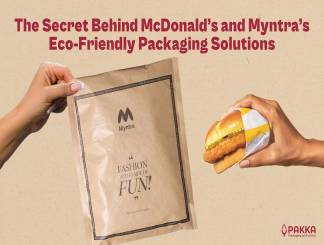
Have you ever wondered what happens to the wrappers, boxes, and bags you toss after eating your burger or receiving your latest fashion order? Companies like McDonald’s and Myntra have cracked the code to make their packaging eco-friendly, and it’s not magic – it’s smart choices in materials and design.
Let’s dive into their secret sauce (pun intended) and how you, too, can make a difference by understanding eco-friendly packaging.
Why do big brands care about eco-friendly packaging?
Every year, the world produces 380 million tons of plastic (source: National Geographic), much of which ends up in landfills or the ocean. Companies like McDonald’s and Myntra are stepping up to reduce this number with biodegradable and compostable packaging.
Take McDonald’s, for example. The company has committed to sourcing 100% of its packaging from renewable or recycled materials by 2025 (source: McDonald’s Sustainability Report). This means your burger wrapper might soon be entirely compostable!
Myntra, on the other hand, has introduced biodegradable packaging for its shipments to replace single-use plastic. This includes eco-friendly packaging boxes and even molded pulp packaging for delicate items.
What materials are they using?
- Biodegradable packaging for food: McDonald’s uses materials like molded fiber packaging and compostable paper for its food containers. These break down naturally, leaving no harmful residue behind.
- Vermicompost packaging bags: Myntra’s vermicompost-friendly bags can turn into nutrient-rich compost, perfect for your plants! They’re made from biodegradable plastic packaging materials.
- Molded pulp and fiber packaging: Both brands use molded paper pulp packaging to protect items like burgers or delicate fashion accessories. It’s sturdy, eco-friendly, and decomposes quickly.
How does this impact you?
Imagine this: You finish your fries and instead of the packaging sitting in a landfill for 500 years, it decomposes in a matter of weeks. Isn’t that amazing?
Switching to eco-friendly food packaging can:
- Reduce waste: Biodegradable containers for food can break down naturally.
- Protect health: Materials like compostable packaging are non-toxic and safe.
- Save the planet: Using eco-friendly packaging materials reduces pollution.
What can small businesses learn?
If you own a small business, here’s the good news: Eco-friendly packaging for small businesses is more accessible than ever! You can find:
- Eco-friendly food packaging boxes for cafes or takeaways.
- Biodegradable sandwich packaging for delis.
- Eco-friendly shirt packaging for clothing stores.
- Biodegradable packing chips for shipping fragile items.
These options aren’t just better for the environment; they also make your brand look responsible and trustworthy.
Fun fact corner: Did you know?
- Vermicompost packaging turns into compost when processed by worms. How cool is that?
- McDonald’s is testing biodegradable straws in several countries to replace plastic ones.
- Molded pulp packaging was first invented in 1903 and is now making a big comeback due to its eco-friendly benefits.
Ready to make the switch?
At Pakka, we create eco-friendly packaging materials for food. Whether it’s molded fiber pulp for burgers or compostable packaging for your next big idea, we’ve got you covered.
Let’s follow the lead of brands like McDonald’s and Myntra and make packaging that’s good for the planet. Ready to take the first step?
Together, we can make a world where packaging doesn’t just protect what’s inside but also protects the planet outside. What are you waiting for? Let’s get started!
You may also like